Korea is renowned for its dedication to early childhood education. Culturally and systemically, it’s a complex mix of parents’ anxieties and desires to secure a future with financial stability and job security for their children.
Achieving high marks, the Universities moving the goal posts for acceptance, and society’s lust for financial and material gain causes what families refer to as “Education Fever.” Think work culture fueled by competition, getting ahead, and even stepping on others to advance—but instead of adults, it’s kindergartners.
Children as young as 4 years old are preparing for University, beginning their schooling as early as 8:30am, topping off their evenings with private tutoring sessions until 10:00pm. No room for play, no room to consider childlike bliss. These high-pressure learning environments have contributed to childhood depression, increase stress, and in extreme cases, suicide. Felicia’s work aims to offer a different path—one centering the well-being of children, rooted in joy, exploration, and connection.
Meet Felicia—photographer, nanny, and educator—who is on a mission to open her first play-based school for children in South Korea, inspired by the Reggio Emilia philosophy. With a decade of studying child psychology, play therapy, and play-based learning, Felicia believes in the power of play as a core teaching method. Despite its global reputation, very few Reggio Emilia-inspired kindergartens exist in Korea, and Felicia is determined to change that.
I first discovered Felicia on Instagram in 2016. Her kids’ fashion photography caught my attention. She captures the spontaneous moments and raw emotions of childhood through a perspective of “letting kids be.” Her photography blends tenderness with strength, and it’s energizing to see her follow her intuition to move into the world of children’s education. More recently, I came across her Instagram story using one of our t-shirt designs as a canvas for an art project with her students, leading to us reconnecting.
We caught up about her journey from teaching English to children in Korea, her perspective on the intense academic culture there versus the U.S., and the influence of “Hagwons” on young students and society at large. Felicia’s new chapter—launching her kindergarten, School of Fish—is truly inspiring. Alas, if only this conversation could be a podcast.
Right now, Felicia is fundraising to cover the costs of launching her school—finding a space, obtaining licensing, and furnishing the classroom for her future students.
We’re honored to share her story and how you can help bring her vision to life by donating directly to her fundraiser, purchasing a How To Be Me. graphic tee, and sharing her GoFundMe campaign.
Read the full Q&A below with Felicia “Fish” McGowan: Childhood educator, kids fashion photographer, founder of School of Fish. Let's dive in!
In recent years, you've become an English teacher for kids in South Korea. What inspired your decision to teach, and what attracted you to Korea specifically?
FM: Growing up I was always told to be a teacher. But coming from a small town in Wisconsin I needed to get out and do something big. So, I defied everyone and pursued the arts. By the time I graduated from university I was completely burnt out. I think my breaking point was vomiting on the subway at 6am on the way to a shoot. I walked 3 miles home and crawled into bed. My agent was disappointed I couldn’t push through. I was only 20 years old. I had never gotten to study abroad and needed a break. So, I decided to go abroad. I was initially attracted to Korea because of its kids fashion market so I could still do editorials for fun.
The burn out is real. It’s incredible what we put ourselves through when we think we need to be doing something a certain way. When you decided to take a break and travel to Korea, were you going in knowing you would become a teacher? How did this opportunity present itself?
FM: I came thinking I’d teach for a year, save some money, work on some art. I did write a feature length film my first year. I actually moved back to the States after a year and directed a commercial for Mattel. I thought I was ready to go back into film. But COVID hit and everything seemed bleak. I appreciated how Korea was handling the pandemic and I wanted to try teaching again with a younger age group. I came back to Korea and taught at a kindergarten. This time I knew I would stick to teaching.
I also think it’s really interesting that growing up you were told to be a teacher, and now you are one, embarking on an entirely new journey to open your own school. Growing up, do you think people were telling you this because of security and stability or because they saw something in you?
FM: Because I loved children so much I was always told to be a teacher or a nurse. But at 17/18 years old I still was absolutely baffled at the idea of going to school my whole life and then working at a school. I really couldn’t understand the teaching profession. Even though I loved my teachers I thought they were crazy.
We understand that it's a pretty rigorous educational system in some regards throughout Korea. What are some of the common threads, and/or major differences between what you see there vs. the schooling system here in the states?
FM: When I first came to Korea I didn’t know anything about the educational system or the culture around education. It’s been continuously eye opening. Overall, America and Korea are both academically obsessed and every year higher expectations are put on young kids. But in America we’re seeing a boom in innovation, technology, and the arts. Sports and clubs are also seen as just as important as academics. In Korea, kids tend to have to quit sports around 10 years old unless they show professional potential. There is also still a lot of stress on pursuing a conventionally successful job like doctor and lawyer.
"If a parent makes a request to an elementary school asking for more homework, there are a lot of steps taken before even possibly fulfilling that request. If a parent does the same to a Hagwon, the next day the students could have twice as much homework. There are no regulations and at the end of the day it’s a business."
Hagwons - or cram schools as we may know them. What are they exactly, and why are they viewed as such an important step in the educational journey for children?
FM: Public schooling in Korea may seem relatively relaxed in the early years, especially in elementary school. There are national regulations governing school hours, curriculum, and even homework limits, particularly for younger students. For example, elementary students typically attend school from around 8:30 or 9:00 AM until 1:30 or 2:00 PM, and homework loads are generally light.
However, South Korea's education system is also highly competitive, especially in the later years. There are more than just three major universities in Korea, but three schools (Seoul National University (SNU), Korea University, and Yonsei University) are widely considered the most prestigious. Admission into these institutions (or top universities abroad) requires academic performance that far exceeds the national curriculum standards. As a result, many families turn to private academies, known as Hagwons, to supplement learning.
Hagwons operate under looser government regulation compared to public schools. They offer everything from math and science to English, art, music, and even coding. These schools often operate late into the evening. Some students may indeed study until 9 or 10 PM, particularly in middle or high school.
Attendance at Hagwons is extremely common. According to government data, over 75% of students in South Korea attend Hagwons, and participation can begin as early as preschool. It's not unusual for very young children—even three-year-olds—to attend academies for subjects like phonics, math, art, science, and piano. While this may resemble extracurriculars in countries like the U.S., in Korea, they are often treated as essential extensions of formal education and may be registered with the Ministry of Education, placing them under certain educational guidelines.
It’s hard to comprehend that kids as young as 3-years-old are training and learning under this amount of pressure. Do Hagwons have an affect on the psyche and mental health of kids who attend them?
FM: I believe Hagwons and the lack of regulations are a large contributor to poor mental health in Korean students. If a parent makes a request to an elementary school asking for more homework, there is a lot of steps taken before even possibly fulfilling that request. If a parent does the same to a Hagwon, the next day the students could have twice as much homework. There are no regulations and at the end of the day it’s a business. There is a lot of pressure to keep parents happy, or they will quit with no notice.
What are the environments like at Hagwons? Are they in-person, online? Is it memorization? Heavy testing?
FM: I once worked at a preschool Hagwon that had a rule that the older children (4-6 years old) cannot play. On the last day of school we didn’t assign homework and let the kids play in the baby room which just had some legos and toy food. One of the 5-year-olds squealed with joy and said, “I can play for the first time!” These children took a 2 hour TOEFL test and our director told us they must all get the highest score. This school promoted itself as a play-school. I don’t think the parents knew it was really more like a prison.
Why do most families aim for these top universities and what is the benefit for the students once they graduate? Are they guaranteed certain roles or job placements in companies? Certain pay?
FM: Academia and financial success are incredibly respected. I’ve never seen so many children in designer clothes and streets filled with luxury cars. Capitalism is the only way here. This is largely due to the Korean War and the fear of communism plus American influence/propaganda. I find it incredibly sad.
"A school of fish moves together, but not in a strict line. I’m tired of seeing kids forced to walk in a line. Let them move and flow and dance as they get to where they need to go."
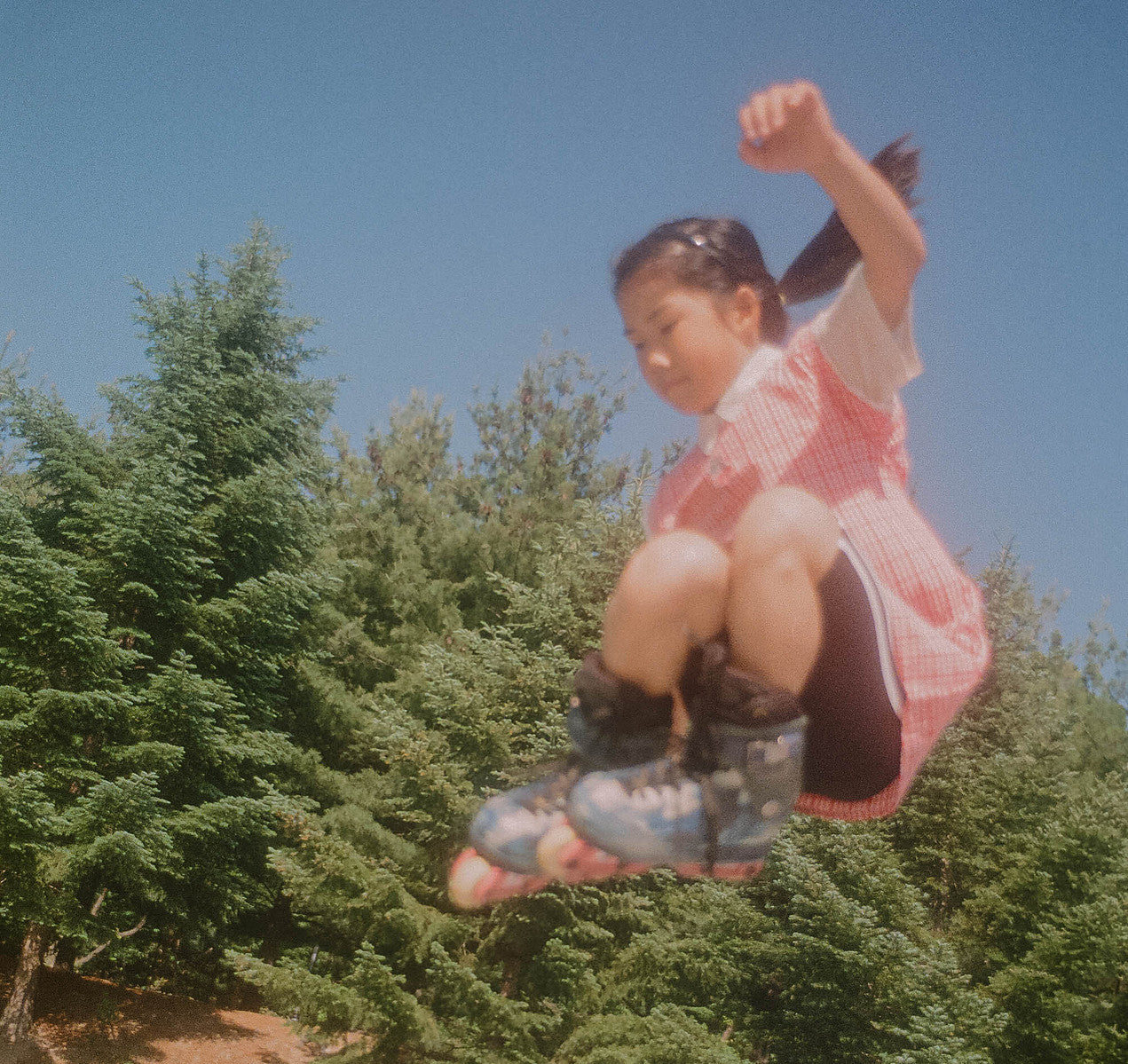


Let's talk about the Reggio Emilia approach. This is the method you’ve chosen to use at your school. Can you give us some background on what Reggio Emilia is, the benefits of teaching children in this style, and how it can benefit them in the long run?
FM: I first discovered the Reggio Emilia approach about five years ago while searching for ways to make my strict, traditional classroom more child-centered. During my research, I came across a teacher in the States who worked at a conventional school but had found ways to incorporate elements of Reggio Emilia into her practice. Inspired by her, I began to do the same, and year after year, I watched my students transform.
The Reggio Emilia philosophy, which originated in Italy, emphasizes that children, materials, and the environment all serve as teachers. Meanwhile, the adult’s role is to observe, document, and ask thoughtful questions. If you’ve ever played dolls with a child and felt frustrated because they seem bossy and make all the rules just know that’s exactly how play is supposed to be. Children lead, and adults follow their cues.
One of the most powerful aspects of Reggio Emilia is its focus on play schemas. These are patterns in the way children explore and make sense of the world. As a teacher, you get to step back, watch closely, and reflect on what children are learning through their actions. It’s an incredibly natural and meaningful way to teach and to learn.
"A huge part of why I’m starting my own school is to pay teachers fair wages."
School of Fish - Can you share how the name came about? We love it so much!
FM: My nickname is Fish and it was given to me by a child, so I always knew I wanted to do something with it. I landed on School of Fish because, first of all, it’s punny. And also, because a school of fish moves together but not in a strict line. I’m tired of seeing kids forced to walk in a line. Let them move and flow and dance as they get to where they need to go.
Absolutely beautiful! Let play be their guide. What are your short term and long term goals and hopes for School of Fish?
FM: A huge part of why I’m starting my own school is to pay teachers fair wages. Teachers here are paid minimum wage which is about 7USD an hour. We really struggle to live well. As the owner I would pay myself a salary so my teachers could earn more. This is a huge goal on top of creating just one more space where it’s safe for children to play.
For parents navigating the future of their children's education, what advice would you offer to better help their journey?
FM: First, know that your child’s development, especially in the early years, is so much more important than their academics. I encourage parents to do real research. I encounter so many parents who love their children so much but don’t know basic child development. Parents who cut their kid’s food into a million pieces to prevent choking but now their 4-year-old still drools because he doesn’t have developed jaw muscles. Research and never stop.
What are some easy ways we as adults can nurture the mental growth and learning styles for our kids across the globe?
FM: Go outside. Take 3 steps back from your child. Zip your lips and observe them. Ask yourself, “what are they teaching themselves in this moment?”
Thank you so much for taking the time to speak with us. We're inspired by your journey and know School of Fish will change the trajectory of children's lives forever.
All images courtesy of Felicia McGowan. Discover more photography work at www.feliciamgowan.com

Support School of Fish Fundraiser
Make School of Fish a reality.
Donate directly to Felicia's GoFundMe campaign.
Shop How To Be Me. Graphic Tees
$5 of every tee goes toward supporting School of Fish GoFundMe campaign.
Share the GoFundMe Campaign
Please consider sharing Felicia's story with someone who might believe in her vision.


